web3 • digital assets • stablecoins • tokenization

Orcun Onur

Go-to-Market & Strategy Lead · Web3 & FinTech Advisor

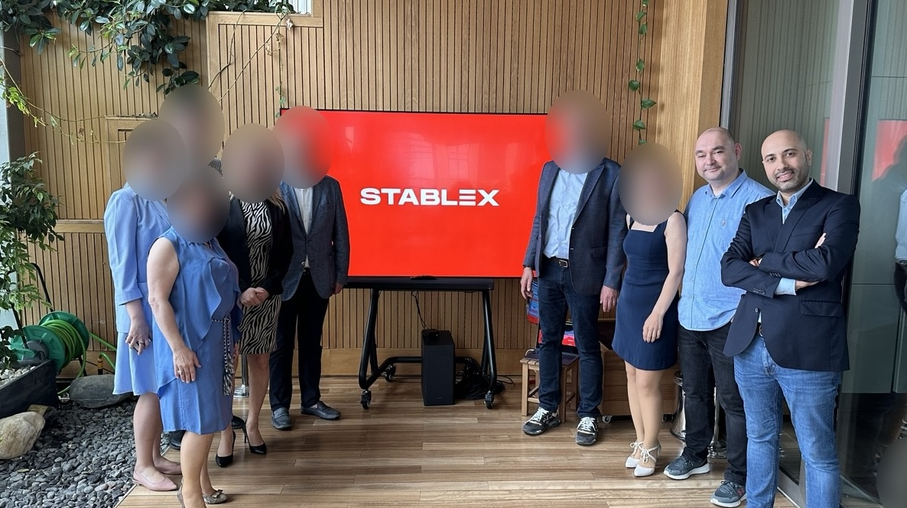
Strategy-led go-to-market professional with 14+ years of experience across crypto, fintech, and global digital products. Co-founder of CryptoWisely.io and WiselyCommunity.com. Former Head of Marketing at Stablex (Akbank-backed exchange) and Brand Manager at BtcTurk PRO, where I helped scale the platform from 900K → 5M+ users.

I advise exchanges, fintech products, and Web3 ventures on market entry, positioning, and go-to-market strategy in regulated and emerging environments. My work connects business strategy with narrative clarity — enabling teams to move from experimentation to scalable adoption.

Current focus areas include stablecoin adoption, tokenization models, RWA narratives, and ETF-driven digital asset positioning — translating complex market dynamics into actionable, institution-ready go-to-market plans.

Go-to-Market Strategy Market Entry & Positioning Stablecoins • Tokenization • RWA Research & Thought Leadership

What I Do

I advise on go-to-market strategy, compliance-aware growth frameworks and institutional-grade positioning for exchanges, tokenized-asset platforms and Web3 ventures. My work connects market structure, regulation and strategy into clear, decision-ready go-to-market models.

How I Work

I work closely with founders, executives and specialist partners across product, research and market intelligence. Engagements are strategy-led, region-aware and aligned with the regulatory and structural dynamics shaping stablecoins, tokenization, RWA and institutional adoption.

Where I'm Active

Working with global teams across multiple regions, I share insights on stablecoins, tokenization, RWA trends, regulation and Web3 market structure through LinkedIn and X — helping bring clarity to complex digital asset narratives.

career timeline

Experiences

Founder & Digital Asset Strategy / Go-to-Market Advisor

CryptoWisely.io

Aug 2024 – Present · Global / Remote

  • Founded a global Web3 & digital assets advisory supporting crypto exchanges, fintech firms, and Web3 ventures across multiple regions.
  • Designed go-to-market and market entry frameworks for stablecoins, tokenization, RWA narratives, and institution-facing products.
  • Advised on stablecoin models, tokenized asset structures, and ETF-related market dynamics, translating complex market context into actionable GTM strategies.
  • Supported positioning, narrative design, and executive communication aligned with regulated and emerging market environments.
  • Provided strategic oversight on licensing roadmaps, AML-risk considerations, and regulatory alignment through trusted legal and compliance partners.
  • Led advisory workshops and planning sprints for founders, leadership teams, and institutional stakeholders.
Go-to-Market Strategy Stablecoins & Tokenization Market Structure Institutional Advisory

Co-Founder & Community Strategy & Market Localization Lead

Wisely Community

2025 – Present · Global / Remote

  • Co-founded a Web3 community and market-intelligence initiative supporting crypto and fintech products across multiple regions.
  • Designed community strategy and localization frameworks aligned with regional culture, language, and regulatory sensitivity.
  • Built community operating models and feedback loops connecting user insight to product and GTM decisions.
  • Advised founders on community narrative, communication structure, and early adoption strategy.
Community Strategy Localization Market Insight Web3 Adoption

Independent Web3 & Digital Asset Strategy Consultant

Freelance · Remote

Oct 2023 – Jul 2024 · Global

  • Provided independent advisory to early-stage and scaling Web3, DeFi, and digital asset projects.
  • Focused on go-to-market planning, positioning, and regulation-aware communication for global audiences.
  • Supported founders on token launch narratives, product messaging, and investor-facing positioning.
  • Conducted market research and regional analysis to support cross-border expansion decisions.
GTM Strategy Web3 Advisory Market Research Founder Support

Head of Marketing

Stablex (Akbank-backed)

Oct 2021 – Oct 2023 · Istanbul

  • Spearheaded the national launch of Stablex, a crypto trading platform backed by Akbank.
  • Managed multi-million USD marketing budgets and led a 12-person cross-functional team.
  • Directed PR, influencer and digital campaigns to increase acquisition and retention.
  • Planned and executed product and growth initiatives for a SaaS-like crypto trading experience serving retail and institutional segments.
  • Oversaw nationwide offline & online activations, including media partnerships and YouTube integrations.
  • Collaborated with compliance and legal units to align brand messaging with regulatory expectations.
  • Positioned Stablex as one of the trusted platforms in Türkiye’s crypto landscape.
Exchange Launch Brand Leadership Team Leadership

Head of Brand Marketing

BtcTurk | PRO

Oct 2020 – Jul 2021 · Istanbul

  • Played a key leadership role in scaling BtcTurk | PRO from 900K → 5M+ users through performance-driven brand strategy.
  • Directed social media, content, growth and creative teams with an approximate $5M marketing budget.
  • Managed influencer & PR programs, national campaigns, sponsorships and large-scale events.
  • Led multi-channel activations that strengthened market leadership and brand trust.
  • Represented the brand as a spokesperson in AMAs, panels and conferences.
User Growth Brand Leadership Public Speaking

Marketing Consultant

Freelance Projects (SMEs & Startups)

Jan 2018 – Oct 2020 · Remote

  • Provided digital marketing and brand consultancy to SMEs and startups across multiple sectors.
  • Developed marketing strategies with budget planning and cross-channel execution.
  • Managed Google Ads, Meta, YouTube, LinkedIn and influencer collaborations.
  • Supported e-commerce operations, UX optimization and launch campaigns.
  • Led expo and fair marketing initiatives to boost visibility and lead generation.
SME Growth Paid Media E-commerce

Division Marketing Manager

E.C.A / SEREL (Elginkan Holding)

Mar 2011 – Jan 2018 · Istanbul

  • Directed marketing operations across 10+ international markets (Germany, Italy, Russia, Middle East, Central Asia, China).
  • Managed a €5M+ annual digital & e-commerce budget, delivering sustained growth through SEO, UX optimization and performance marketing.
  • Developed and launched multiple product lines with integrated go-to-market and omnichannel campaigns.
  • Coordinated with international distributors, agencies and retail partners to drive sales and brand visibility.
  • Led cross-functional creative, sales and product teams to align marketing and commercial objectives.
  • Consistently achieved double-digit growth across online and offline channels.
Global Markets Digital & E-commerce Omnichannel GTM

Marketing Supervisor

Base & Flavours TR. CO. LLC.

Oct 2009 – Sep 2010 · UAE

  • Managed marketing operations for Unifine Food & Bake Ingredients, Fugar Produzione and IBC Belgium brands across the UAE.
  • Coordinated with HQ in Lebanon to align regional campaigns with global strategies.
  • Developed annual marketing calendars with consistent seasonal activations.
  • Led B2B events and promotional campaigns, strengthening distributor and client relationships.
Food Ingredients B2B Marketing Regional Campaigns

FMCG & Manufacturing Sector · Early Career Roles

Sales & Marketing

May 2003 – Apr 2008 · Turkey

  • Built early professional foundation in sales and marketing within consumer products and manufacturing sectors.
  • Gained experience in client management, sales operations and product promotion.
  • Supported brand activities and market outreach while developing leadership and communication skills.
FMCG Manufacturing Sales Ops

Success Stories

BtcTurk PRO Insider Award

BtcTurk | PRO

Insider LIFT Awards 2021

Our marketing and engagement strategy at BtcTurk | PRO earned the platform the 2021 Insider LIFT Award in the category of Highest User Engagement in Mobile Application.

We crafted performance-driven campaigns supported by data, strong product collaboration, and an active community voice — strengthening user loyalty and platform visibility.

User Engagement Brand Strategy Campaigns
Stablex Launch

Stablex Bilişim Tek. A.Ş.

Launch & Acquisition

Played a central leadership role during the acquisition of Stablex by Ak Yatırım. Led all marketing, product positioning, identity creation, and user acquisition strategies following the transition.

From mobile product design to community funnels, we delivered an end-to-end growth and trust strategy for a regulated crypto trading platform entering the market.

FinTech Acquisition Exchange Launch
BtcTurk PRO Growth

BtcTurk | PRO

Expansion & User Growth

Spearheaded user acquisition, growth marketing, influencer projects, and product-aligned campaigns helping scale BtcTurk | PRO from 900K → 5M+ users.

Built and ran integrated growth funnels, agency operations, and targeted content strategies that strengthened the brand’s leadership in the Turkish crypto market.

Crypto Exchange User Growth Brand Leadership
AndX Global

AndX Global

Market Entry & Brand Development

Led AndX Global’s entry into the Turkish crypto ecosystem by designing the brand identity, market positioning, and audience targeting strategies.

Managed partner selection, marketing operations, social media channels and community activations ensuring measurable traction and a successful market launch.

Market Entry Brand Strategy Partnerships

My References

AndX Logo
Uzmancoin

Portfolio

Selected Case Studies

Case library — compact view here, full detail on CryptoWisely.io

Click a case to expand. Full documentation, proof points, and access-controlled materials live at the references hub.

Named • Growth

BtcTurk | PRO — Integrated Growth, Activation & Community Engine

Trust-led scale in Türkiye: lifecycle triggers + education + community loops; contributed to 900K → 5M+ users.

BtcTurk | PRO — expanded visual

Designed an integrated growth system combining mass credibility signals with data-driven activation. Built lifecycle segmentation, behavior-triggered campaigns, and an education-first community engine across Telegram/Discord/IG/YouTube to improve retention quality.

The outcome was a scalable operating model: measurable activation efficiency, stronger trust conversion, and sustained organic lift driven by community participation.

TrustLifecycleActivationCommunity
Named • Positioning

Stablex — Pre-Acquisition Launch Readiness & Investor Communication

Institutional-grade narrative + disciplined entry plan before scale; aligned to investor and compliance expectations.

Stablex — expanded visual

Built the launch story and messaging constraints to keep claims defensible and institution-ready. Prepared investor-facing materials, rollout sequencing, and an awareness phase targeting HNWI and institutional partners.

The work created a credibility baseline: clearer positioning, stronger stakeholder alignment, and a coherent launch pathway under acquisition dynamics.

PositioningInvestor commsLaunch sequencing
Named • Trust Reset

Stablex — Post-Acquisition Brand Launch & Trust-Building Growth

PR-first credibility + education + community operations; scaled efficiently under a banking-group trust lens.

Stablex — expanded visual

Led the “trust reset” narrative: unified bank-grade credibility signals with crypto-native education content. Shifted focus toward earned media, institutional messaging, and community support loops to replace expensive media dependency.

Outcome: sustainable perception lift and cost-efficiency, with a repeatable trust-led growth playbook for regulated fintech contexts.

PREducationOrganic growth
NDA • Execution

NDA — Global Web3 Growth & Token Activation (TGE-Ready)

90-day rollout: awareness → community → activation; global regions + multilingual distribution under NDA.

NDA — expanded visual

Built the full GTM operating rhythm: narrative, listings visibility, credible PR distribution, and always-on community flows across Telegram/Discord/X. Localization and moderation enabled multi-regional depth without paid-heavy dependency.

Deliverables were structured to be investor-friendly and execution-ready, with measurable KPIs and controlled disclosure under NDA.

GTMPRCommunityActivation
Anonymized • GTM

AndX — Exchange Marketing & Turkey Market Entry System

A repeatable market-entry framework: positioning, claim-safe messaging, rollout sequencing, KPI checkpoints.

Designed a controlled market entry model optimized for trust formation before scale: narrative constraints, channel sequencing, and measurable checkpoints. Built to reduce wasted spend and increase conversion context in a regulated-perception environment.

This case is structured to keep confidential specifics protected while still showing the operating logic and decision framework.

Market entryTrustSequencing
Sample • Framework

NovaX — Strategic GTM & Token Architecture (Access-Controlled)

Framework case showing how narrative, distribution, and execution align into a single operating system.

Presented as a framework sample to demonstrate operating logic. Full materials are access-controlled to protect strategic IP and confidential deliverables.

Typical scope: narrative constraints, sequencing, channel design, stakeholder alignment, and KPI governance.

FrameworkToken logicGTM system
NDA • Infrastructure

NDA — Regulated Exchange & Custody Architecture

Blueprint-first advisory: licensing scope, custody model, operational boundaries, sequencing to avoid retrofits.

Built a compliant operating model with clear separation of responsibilities (exchange vs custody), governance, and roadmap sequencing. Focus: reduce risk, improve auditability, and keep implementation decisions defensible under scrutiny.

Access is controlled to protect sensitive architecture and stakeholder materials.

LicensingCustodyOperating model
NDA • RWA

NDA — RWA Infrastructure & Market Access (US-Focused)

Institutional RWA design: permissioning, ownership separation, token boundaries, and settlement logic under US-grade constraints.

Designed a “token as control layer” architecture: interaction rules, permission gates, and disclosure boundaries aligned to institutional requirements. Focused on market access pathways, settlement mechanics, and operational clarity.

Full materials remain access-controlled due to regulatory sensitivity and partner confidentiality.

RWAUS-gradePermissioned
Framework • Access-Controlled

Oceon — Regulation → Market Access → Settlement → Tokenization Framework

A structured operating-layer view: constraints, rails, and tokenization logic to align stakeholders and roadmaps.

Built to translate complex institutional reality into a clear system view: regulatory constraints, market access paths, settlement “plumbing,” and tokenization workflows. Helps discovery calls, stakeholder alignment, and roadmap clarity.

Access-controlled to protect strategic IP and confidential partner context.

RegulationSettlementTokenization

Articles

Deep Dives

From Hype to Habit & Beyond

Selected articles originally published on LinkedIn – now collected here as a readable, collapsible archive.

Between Visibility and Trust / Crypto Marketing Between Visibility and Trust

BETWEEN VISIBILITY AND TRUST / CRYPTO MARKETING'S MOST UNDERVALUED LAYER

Most crypto marketing debates default to “awareness” vs “performance”. Reach vs ROI. Brand vs growth.

But there is a third layer sitting quietly between the two that rarely gets the attention it deserves:

Trust visibility.

Not “brand awareness”, not “market share”, not “TV commercials”.

Trust visibility is the moment when a potential user stops scrolling and thinks:

“This looks like something I can actually put my money into.”

In traditional finance, decades of regulation, licensing, and institutional behavior constructed a default trust baseline. Most banks don’t run ads explaining "we won't disappear tomorrow" because the system itself communicates that on their behalf.

In crypto, that baseline doesn’t exist.

So brands try to replace it with aggressive marketing, community noise, or celebrity signals.

But none of these – on their own – actually builds trust visibility.

Let’s break down what it really looks like and why this layer may be the most valuable real estate in future crypto marketing.

————————————

1. Visibility without trust is just noise

Almost every serious crypto user has seen this pattern:

• A new protocol appears everywhere for 7–10 days – sponsored posts, banner ads, meme campaigns.
• Twitter (X) and Telegram are flooded with campaigns, whitelist forms, airdrop tasks, "retweet for allocation".
• KOLs are lined up. YouTubers produce "deep dives" that sound suspiciously similar.
• Then… after the TGE, everything becomes quiet.

The project was visible.

But it wasn’t trust-visible.

Any serious investor could feel that the entire communication was a rush to unlock short-term liquidity – not to build long-term participation.

And this is where many teams underestimate their audience.

Retail investors in 2025 are not the same as in 2017. Even "degens" have developed pattern recognition. They may still speculate, but they can tell the difference between:

• A hype-engineered moment
• A carefully constructed trust narrative

Visibility puts your name in the room.

Trust visibility determines whether people stay.

————————————

2. The three ingredients of trust visibility

When I look at projects that convert visibility into lasting trust, they tend to share three structural traits.

They don’t always execute them perfectly. But they understand the framework.

Ingredient 1 / Signaling of long-term skin in the game

Not just "team doxxed".

Not just "respected backers".

Structural signals that this project is designed to stay.

• Clear token vesting across founders, investors, and ecosystem.
• Honest discussion of lockups and unlocks (no hiding the cliff in fine print).
• Public explanation of how team incentives are aligned with post-launch performance.
• Simple, visual explanations of treasury usage and runway.

When you transfer money into a new protocol, you are not simply buying tokens.

You are buying into someone else’s time horizon.

If the communication skips this entirely, trust visibility drops to near zero – even if awareness remains high.

Ingredient 2 / Compliance consciousness (even when regulation is unclear)

Most projects hide from regulation.

The better ones acknowledge it.

The best ones build an explicit narrative around it:

• Which jurisdictions they exclude and why.
• How they think about KYC, AML, and future policy changes.
• Where they draw the line on user protection (e.g. leverage, derivatives, cross-chain risks).
• How they plan to adapt to MiCA, SEC actions, or local licensing regimes.

This doesn’t mean every project must become a bank.

But when you see a protocol pretending that regulation doesn’t exist – or joking about it – that is not "crypto-native" bravery.

It’s an early sign that the project is not building a trust-visible future.

Ingredient 3 / A believable reason to exist in 5–10 years

Good marketing answers "Why now?"

But trust visibility often begins with a different question in the user’s mind:

"Will this still matter when the next cycle arrives?"

Projects that score high on trust visibility usually have:

• A clear thesis about how the market is evolving (stablecoins, RWA, L2s, cross-border payments, etc.).
• A specific problem they solve better than anyone else.
• A roadmap that doesn’t collapse after the TGE or first listing.
• The courage to say "this might not be for everyone" rather than promising universal disruption.

In other words: They are not just trading on the volatility of the moment.

They are trading on the direction of history.

————————————

3. Why many campaigns fail at this layer

Most marketing teams are evaluated on short time horizons:

• 30–60 day performance.
• Launch-week metrics.
• First month of on-chain activity.

As a result, the communication is engineered entirely around the first interaction:

• CPMs/PPC efficiency
• Click-through rates
• Discord joins
• Task completion (for airdrops)

Very few are measured on:

• 6-month retention
• Net new users after unlock events
• Migration of speculators → long-term holders/liquidity providers
• Brand recall during bear phases

But trust visibility is exactly what determines these outcomes.

It’s why some brands fade as soon as incentives drop – while others quietly keep growing despite lower volatility, fewer headlines, or harsher regulation.

When your KPIs are misaligned with trust visibility, you inevitably optimize for hype.

————————————

4. How to design for trust visibility (practical steps)

Here are some questions I use when advising teams:

On the website & landing pages:

• Can a new user clearly see where the company / foundation is legally based?
• Are there clear explanations of risk (leverage, smart contract, counterparty) in user language, not legalese?
• Is token distribution explained in a way that a 16-year-old can understand?
• Do we show the humans behind the project – or just logos and mascots?

In community channels:

• Do moderators have clear guidelines on what they will NEVER promise (price, guaranteed allocation, “safe moonshots”)?
• Are we honest when there are delays, bugs, or security issues – or do we try to drown them out with memes and giveaways?
• Is there a visible track record of answering difficult questions?

In marketing campaigns:

• Does every paid campaign have an organic counterpart that reinforces credibility (e.g. explainers, dev updates, audits)?
• Are KOLs selected for credibility and alignment – or for their ability to "move the chart" for 48 hours?
• Are we willing to say "no" to tactics that damage trust visibility, even if they temporarily increase volume?

Trust visibility is not a line item in your budget.

It’s a design principle.

————————————

5. Between visibility and trust lies survivability

In the next cycle, the most valuable asset for any crypto brand will not be:

• A viral meme
• A celebrity endorsement
• A short-term spike in TVL

It will be the ability to consistently appear in front of users as:

• Understandable
• Responsible
• Long-term aligned

This doesn’t mean becoming boring.

It means building the kind of visibility that doesn’t collapse under scrutiny.

Awareness can be bought.

Trust must be built.

And between the two lies a fragile but powerful layer – the one where real, lasting value is created.


The Advertising Paradox: Visibility vs. Credibility

THE ADVERTISING PARADOX / WHY MORE VISIBILITY CAN MEAN LESS CREDIBILITY IN CRYPTO

Advertising is supposed to create trust.

In traditional finance, a brand that runs clear, well-placed ads in respected channels usually increases its perceived credibility.

But in crypto, the opposite often happens:

The more aggressively a project advertises, the less serious investors trust it.

Why?

Because the context, channels, and history of this industry have twisted the basic relationship between visibility and credibility.

This is what I call the advertising paradox – and if you’re building in this space, it should fundamentally change how you think about campaigns.

————————————

1. How we got here: from banners to "bondage"

Over the last cycle, we saw:

• Exchanges buying naming rights to stadiums.
• Protocol logos on every conference, jersey, and airport banner.
• Aggressive TV and YouTube buys promising easy access to "the future of finance".
• Influencer campaigns with little risk disclosure.

Then the collapses came.

User funds were trapped or destroyed.

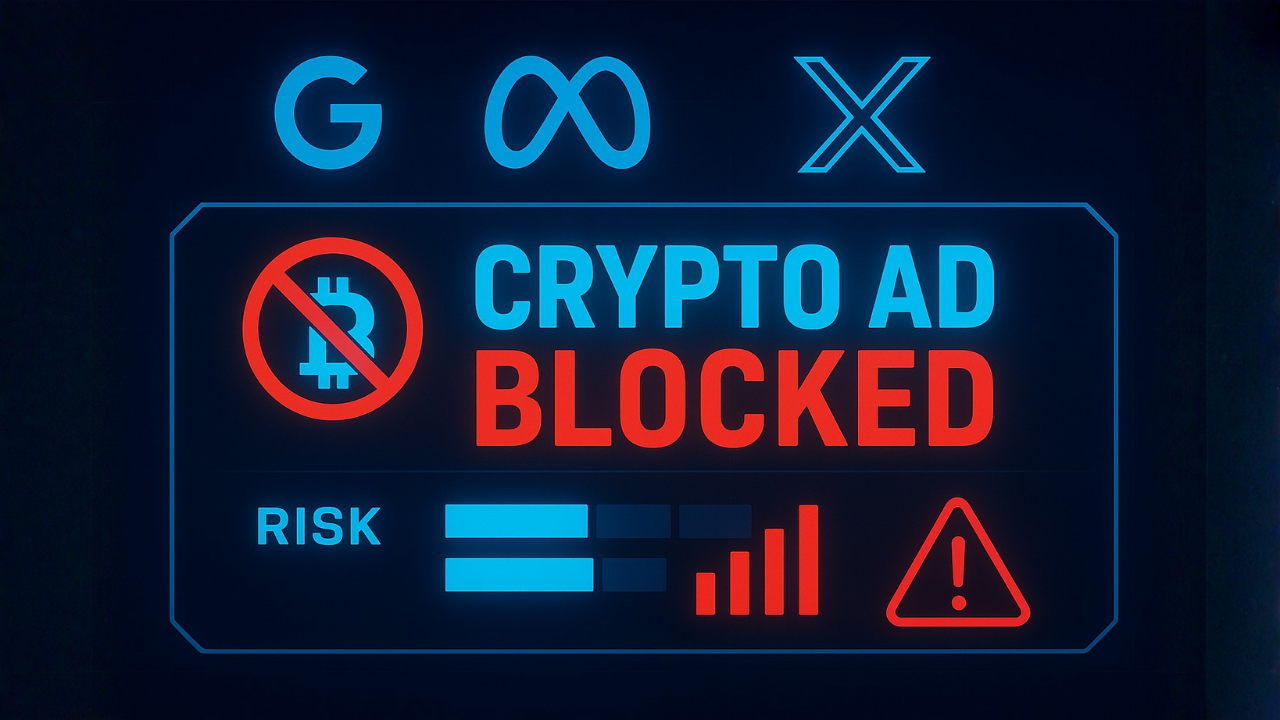
Regulators and media began treating "high spend on advertising" as a potential red flag.

In other words:
• The very tools that once signaled trust in traditional finance became, in crypto, associated with excess, misdirection, and imbalance between marketing and risk management.

————————————

2. The paradox in practice

Imagine you’re a serious retail investor, a family office, or a compliance officer inside a bank.

You see:

• Project A: Quiet, technical, visible mostly through developer updates, documentation, and targeted communication around regulation and security.
• Project B: Highly visible through sponsorships, loud advertising, aggressive retargeting, and influencer noise.

Ten years ago, many would have gravitated toward B – "they’re everywhere, they must be strong."

Today, in crypto?

For many serious profiles, it’s the opposite.

High advertising presence now raises questions:

• "Why are they spending this much on visibility instead of infrastructure or risk?"
• "Are they trying to compensate for something?"
• "How dependent are they on constantly attracting new users or deposits?"

Visibility, in this context, stops being a pure asset.

It becomes a signal to interrogate.

————————————

3. Why regulation makes this even sharper

As frameworks like MiCA (EU), stricter SEC activity (US), and new Gulf / Asian licensing regimes roll out, marketing and advertising sit under a brighter spotlight.

Regulators are asking:

• "What promises are you making in public?"
• "Are you fairly describing risk, especially to retail?"
• "Are you targeting the right investor profiles with the right language?"

This means:

• A bold campaign that might have "pumped" your brand in 2021 could become regulatory evidence in 2025–2026.
• Your ad history becomes part of your compliance record.

The paradox intensifies:

The more loudly you shout, the more people – including regulators – will look at what you’re saying and how you’re saying it.

————————————

4. So, should crypto brands stop advertising?

No.

But they need to redefine what "advertising" is for.

In this environment, the job of advertising is not:

• "Buy as many users as possible, as fast as possible."

The job is:

• "Find, inform, and onboard the right user segments in a way that reinforces long-term trust and regulatory alignment."

That means:

• Less aggressive mass-market messaging.
• More focus on educational, contextual, and risk-aware communication.
• Tighter integration between legal, compliance, and marketing teams.

————————————

5. Three practical shifts for crypto advertising

Shift 1: From "attention first" to "fit first"

Instead of asking:

• "How many impressions can we buy?"

Ask:

• "Which markets and segments can we responsibly and compliantly serve – and how do we reach them specifically?"

Example:
• Targeted campaigns toward traders and allocators who understand risk – not generic "get rich" messaging for general retail.

Shift 2: From "hype language" to "regulated language"

In many jurisdictions, terms like:

• "Safe", "guaranteed", "risk-free yield" are clearly problematic.

Good crypto advertising will begin to sound more like:

• "Here’s how we manage risk."
• "Here are the scenarios where you can lose money."
• "Here’s how this fits within your broader asset allocation."

Yes, it’s less "sexy".

But it’s more compatible with the future.

Shift 3: From "one-shot" campaigns to "communication systems"

Instead of buying huge bursts of visibility around launches, think in:

• Smaller, sustainable cycles.
• Integrated with content, community, and product updates.
• Consistent narratives that regulators, institutions, and users can all understand.

Advertising becomes a node in a system – not a standalone blast.

————————————

6. What serious users are really looking for

If you speak to high-net-worth individuals, family offices, or institutional desks considering crypto exposure, they rarely ask:

• "Which project has the coolest ads?"

They ask:

• "Who will still be here in 5–10 years?"
• "Who is most aligned with regulators?"
• "Who communicates risk and governance like an adult?"
• "Who treats marketing as part of their fiduciary responsibility, not just a growth engine?"

Your advertising can either support these answers – or undermine them.

————————————

7. The future: visibility that strengthens, not weakens, credibility

The brands that win the next era of crypto will:

• Still run campaigns.
• Still invest in media.
• Still care about awareness.

But they will do it in ways that:

• Are structurally aligned with regulation.
• Respect the intelligence of serious users.
• Build a track record of responsible communication.

In that world, advertising is no longer a loud costume a project puts on for a season.

It becomes part of its public risk and trust infrastructure.

That’s how we resolve the advertising paradox:

By making sure every unit of visibility also increases credibility – instead of trading one against the other.

The Regulation Layer: How Countries Shape Crypto Visibility

THE REGULATION LAYER / HOW COUNTRIES SHAPE CRYPTO VISIBILITY

Every country rewrites the crypto story in its own way.

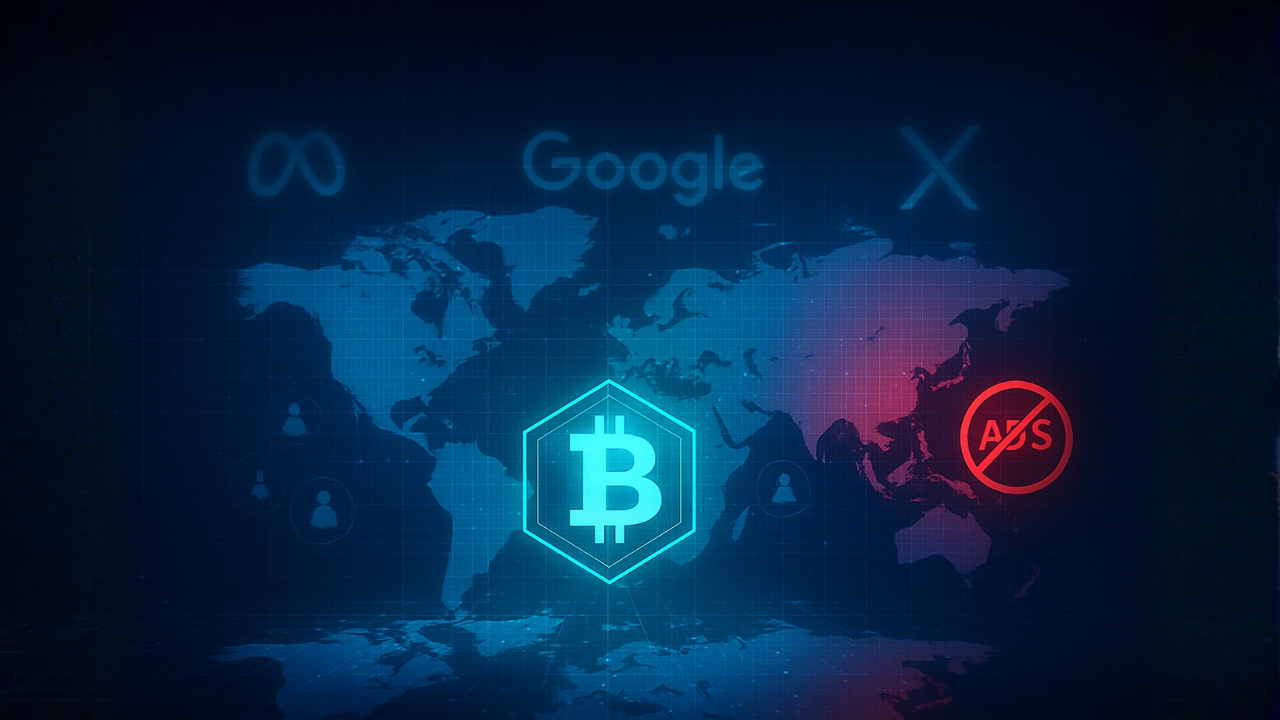
Platforms already live with rules from app stores, social media, ad networks, analytics, wallets, analytics providers.

Then on top of that, national regulation enters.

This is where visibility becomes something different.

Not:

• "Can people see us?"

But:

• "In which countries are we even allowed to speak – and how?"

This is what I call the regulation layer – the invisible framework that shapes which stories can be told, to whom, and on which terms.

For crypto brands trying to grow globally, this isn’t just a legal or compliance issue.

It’s a marketing architecture issue.

————————————

1. One protocol, multiple realities

Imagine a single protocol with users in:

• Europe

Global Crypto, Policy & Risk Landscape

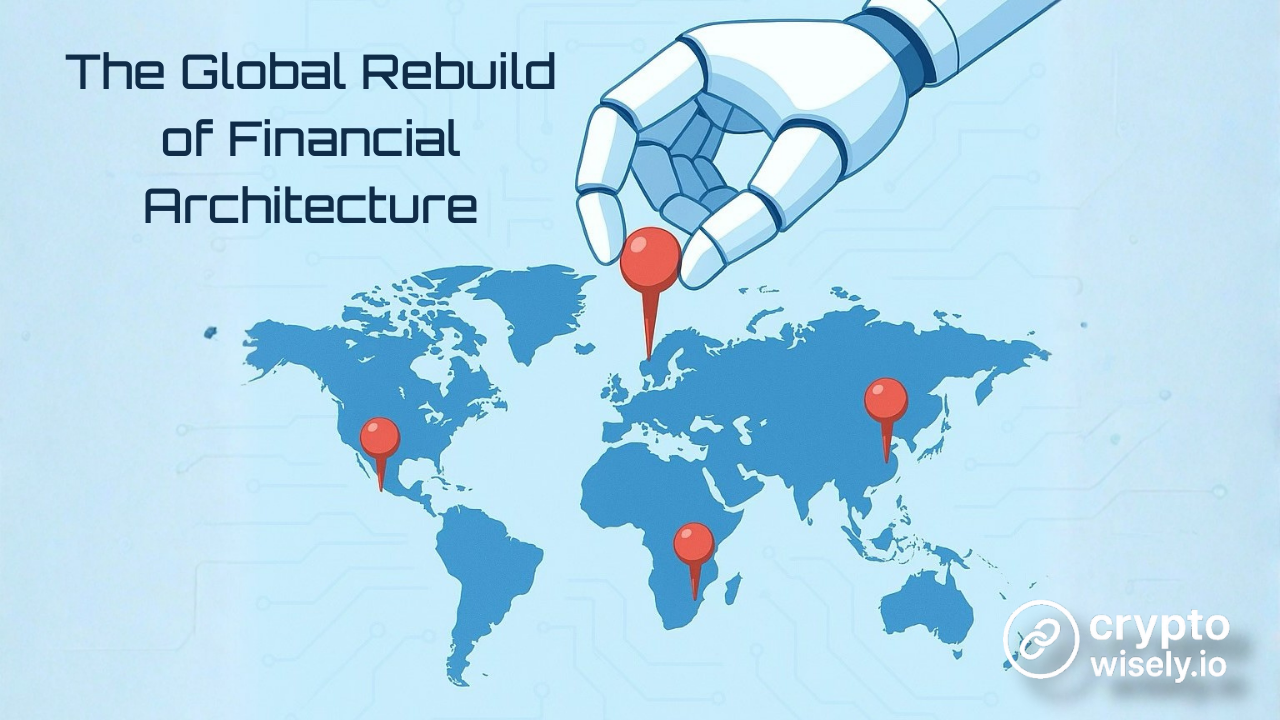
GLOBAL CRYPTO, POLICY & RISK LANDSCAPE / THE LAST FEW DAYS ARE QUIETLY REWRITING THE NEXT FINANCIAL ARCHITECTURE

The last few days weren’t just news cycles. They were signals. Signals that the entire financial architecture is shifting at the same time — regulation, banking, AI, payments, stablecoins, AML, and market structure.

Below is a complete overview of what actually changed across the US, EU, Gulf region, Africa and the global policy environment.

1. United States / Banks Are Moving Crypto Into Their Operating Layer

The OCC’s guidance allowing banks to hold crypto-assets to pay network fees sounds small. It isn’t. It means blockchain is no longer an experiment. It’s becoming part of the operational stack.

• Banks can now hold native assets
• Settlement rails start moving on-chain
• Stablecoin utility increases
• Compliance frameworks adapt to hybrid balance sheets

Even Ari Redbord’s recent framing pointed in the same direction: regulation is beginning to move from blocking innovation to enabling it.

2. Basel Committee / The Capital Framework Is Being Rewritten

The most important shift of the week: Basel calling the current crypto capital rules “unworkable.”

• The Fed rejected the risk weights
• The Bank of England rejected them
• Pressure from the US and UK increased
• Basel finally accepted “a different approach is needed”

This is the biggest unlock for institutional adoption. It turns crypto from a balance-sheet liability into a balance-sheet opportunity.

3. Europe / MiCA Tightens, But Demand Grows Faster

In the last 48 hours:

• MiCA custody requirements triggered industry debate
• EU banks accelerated stablecoin issuance tests
• Tokenisation sandboxes are taking shape
• FCA’s fund tokenisation work is positioning London differently
• Governance and liability rules are getting heavier

Belgium’s remarks this week were clear: Europe wants centralised credibility, but the innovation curve is outrunning the policy cycle. A classic policy bottleneck.

4. Gulf Region / Saudi Arabia and Dubai Are Quietly Building the Next Hub

This week’s signals from the region were sharp:

• Saudi Arabia is evaluating stablecoins through a macro-policy lens
• Dubai is strengthening AI + tokenisation convergence
• Gulf regulators are preparing to fill the gap created by US–EU regulatory friction

The region is no longer “crypto-friendly.” It’s positioning itself as the operational hub for the next financial system.

5. Africa / Stablecoins Are Becoming a Macro Tool, Not a Speculative Asset

From the Global Stablecoins Dialogue:

• USD stablecoin usage exploded in inflation-heavy markets
• Where banking infrastructure is weak, stablecoins act like money
• Gold-backed and hybrid models are being taken seriously
• Dollar dependency is being re-evaluated

Stablecoins aren’t a technology story. They’re becoming a macroeconomic instrument.

6. EMVCo / AI Agents Are About to Start Paying

The most under-discussed development: EMVCo’s new “Agent Present” standard.

• AI agents receive a cryptographic payment token
• Delegated authentication using FIDO
• Merchant verifies the agent’s signature
• A new fraud liability model
• A universal payment language for Microsoft / Google / OpenAI agents

This is the first real step toward AI becoming an economic actor.

7. Financial Crime / The Problem Isn’t Intelligence, It’s Speed

Across the AML world, one theme dominated: threat actors aren’t getting smarter. They’re getting faster.

Thomas Armstrong’s new ACAMS piece captured the sector’s fault line perfectly: the “agility gap.”

• Criminal networks now behave like supply chains
• Cross-chain velocity is too high
• Neobanks + crypto + fintech create layered risk
• AML teams operate on audit timelines
• Threat actors iterate hourly; institutions update monthly

This is no longer a compliance issue. This is a systemic risk.

8. Market Stress / Bitcoin Below $82K, but Not for Structural Reasons

According to Forbes:

• BTC fell below $82K
• Down 25% for November
• ETH and majors also down double digits
• Options data shows downside positioning
• Macro headlines (trade, rates, geopolitics) added pressure

This is not a technology failure. Not a structural failure. Not a security failure. It’s a liquidity and sentiment compression. And this environment historically precedes institutional entry.

9. The Bigger Picture / This Is Not a Transition Period. It’s a Construction Period.

Put everything together:

• Basel rewiring capital rules
• OCC pulling banks into blockchain rails
• MiCA becoming the global credibility filter
• Gulf region building infrastructure
• Africa using stablecoins as macro tools
• AI agents entering the payment layer
• AML teams confronting velocity risk

This is not cleanup. This is architecture. A new financial system is emerging. Quietly. Fast. Globally.

10. My Take

The noise is high but the direction is clear. We are watching the installation phase of the next financial architecture.

Risk, speed, governance, and settlement are being rewritten at the same time. The intersection of AI, crypto, banking and policy is no longer theory. It’s becoming the operational layer.

This shift is moving slowly on the surface but rapidly underneath.

From Hype to Habit – Part 1: Why Attention Isn’t the Goal

From Hype to Habit – Part 1: The Early Chaos (2016–2019)

Noise, curiosity and the first wave of crypto marketing.

This article marks the beginning of a seven part series exploring how crypto and Web3 marketing evolved from hype to habit, told through the eyes of a marketing professional who has witnessed the industry’s transformation since 2016.

My Journey into Marketing

I have been part of the marketing world since the early 2010s. Back then, traditional campaigns were still dominant. TV spots, print ads and billboards were the main playground. “Brand value” was something you could feel, not easily measure.

Then came the digital transformation. Performance marketing, measurement tools and ROI dashboards changed everything. We all became data driven marketers.

Discovering Crypto (2016–2019)

Around 2016, I encountered something entirely new: the rise of crypto. It was not just another channel or trend, it was a whole new world with its own language, logic and rhythm.

Since that day, I have witnessed its evolution firsthand. After nearly nine years inside this ecosystem, I decided to share my reflections in a seven part series exploring how crypto marketing transformed from pure hype to meaningful habit.

The Hype Era: 2016–2019

Those first years were fast, loud and full of excitement. Projects raised millions while still at the idea stage and Telegram groups grew by thousands overnight.

It was a time when marketing was not about explaining a product, it was about selling a dream. For marketers who came from traditional and digital backgrounds, this space felt chaotic yet incredibly enlightening.

None of the old models worked anymore, not customer funnels, not loyalty loops, not even basic messaging logic. User behavior, trust and community engagement had to be redefined from zero.

Then came moments that defined an era. Binance temporarily closed new registrations in early 2018 due to overwhelming user demand, a symbol of how fast crypto adoption outpaced infrastructure. A few years later, it would acquire CoinMarketCap, showing how quickly early chaos turned into consolidation and maturity.

Learning Through Uncertainty

Those years taught me one of the most valuable lessons: crypto marketing is, at its core, the art of managing the unknown.

While brands struggled to build credibility, users were struggling to understand the technology itself. Both sides were experimenting, failing and evolving, and that made communication simultaneously harder and more human.

Even though that first wave of hype eventually faded, the seeds planted during those years grew into today’s Web3 ecosystem. Ownership, decentralization and community driven growth were all born out of that noisy, unpredictable beginning.

So this first chapter looks back not with nostalgia but with perspective. Because before we can talk about where Web3 marketing is going, we should first remember how it began.

Next in the series: The Winter of Trust (2019–2020), when overpromising met reality.

From Hype to Habit – Part 2: The Cost of Shallow Growth

From Hype to Habit – Part 2: The Winter of Trust (2019–2020)

When Overpromising Met Reality

By the end of 2019, the industry started sobering up. The hype had done its job. It brought attention, innovation, and noise. But it also brought unrealistic expectations. Roadmaps were overpromised. Funds were mismanaged. Words like “revolution” were used far too easily.

Then came the silence.

The market cooled. Regulations tightened. Investors began asking a simple but painful question: Who can we really trust?

The End of Illusions

For marketers, that question hit the hardest. It was no longer enough to craft a vision or spark curiosity. People wanted accountability. Whitepapers and slogans could not hide weak fundamentals anymore. Every claim demanded proof.

That period redefined what it meant to communicate in crypto. You could not talk your way through uncertainty. You had to earn your place through clarity. It taught an uncomfortable but necessary truth. Excitement can launch a project. Only trust can sustain it.

The real builders did not chase attention. They showed up week after week with transparency, updates, and humility. In that consistency, credibility was born.

Redefining the Narrative

This was the moment when marketing began to mature. Loud “moon” talk gave way to meaningful storytelling. Influencers turned into educators. Communities stopped only being counted. They started being cultivated.

Brands that had obsessed over price began investing in purpose. They learned that education scales better than hype. They learned that clarity outlasts speculation. The industry started to rewrite its own language. It moved from promise to proof, from speed to substance.

A Necessary Winter

The so called crypto winter was not a collapse. It was a cleanse. It stripped away the noise and forced everyone to rebuild on stronger ground.

Many projects disappeared. But those that stayed discovered a timeless principle. Hype makes people look. Trust makes them stay.

That winter built a new generation of marketers and founders. Pragmatic. Transparent. Allergic to shortcuts. It was cold, yes, but it was necessary. Because credibility, like trust, can only grow in silence.

Next in the series: Part 3, The Builders’ Era (2020–2021). When resilience replaced speculation and execution finally spoke louder than promises.

From Hype to Habit – Part 3: Building Durable Investor Behaviour

When resilience replaced speculation, and execution finally spoke louder than promises.

There’s a moment in every market when the noise fades and what’s left are the people still building after the lights go out. For crypto, that moment came in 2020.

The “Builders’ Era” wasn’t born in bull markets or conference headlines. It began in Discord channels, GitHub repos, and half-lit home offices where small teams decided that crypto didn’t need another hype cycle, it needed infrastructure. After the ICO mania collapsed and the market cooled, those who remained weren’t speculators anymore; they were engineers, designers, risk-takers, and believers.

2020 was the year they quietly rebuilt everything that hype had broken.

⚙️ DeFi Summer and the Age of Real Experiments

DeFi Summer was the first spark of credibility. It wasn’t polished. It wasn’t user-friendly. But it worked.

Protocols like Uniswap, Aave, Compound, and Curve began turning code into coordination — showing that decentralized systems could actually move billions in liquidity without a single CEO or middleman. This was no longer about “whitepapers”; it was about shipping.

And as liquidity grew, so did responsibility. Audits became the new badge of honor. Smart contract risk became a discipline. People started caring less about “moon” and more about mechanism design.

The builders who had been ignored during the 2017 noise were suddenly setting the standards for trustless finance. They weren’t loud. They were effective.

🌐 The Rise of the Tools

While DeFi captured headlines, something even more important was happening behind the scenes. Infrastructure started catching up.

Ethereum gas wars pushed developers to explore alternatives — giving birth to Layer 2 solutions like Polygon, Arbitrum, and Optimism. The narrative shifted from “Which token should I buy?” to “Which chain should I build on?”

Meanwhile, oracles like Chainlink, data indexing with The Graph, and wallet UX improvements (MetaMask, WalletConnect) quietly matured. Each solved a piece of the puzzle: scalability, interoperability, usability.

The entire Web3 stack — from payments to storage — was finally being assembled by people who didn’t care about attention, only uptime.

🧬 NFTs and the Culture Bridge

Then came 2021 — the year crypto met culture. When Beeple sold an NFT for $69 million, the world finally paid attention again. But what most people missed is that NFTs were never about JPEGs — they were about ownership.

Suddenly, builders realized crypto could move beyond finance. Projects like Axie Infinity, NBA Top Shot, and OpenSea proved that blockchain could support digital identity, community, and creativity — not just speculation.

It wasn’t just coders building anymore. Designers, artists, musicians, and brands joined the movement. Crypto started speaking a language the mainstream could finally understand: utility.

🔩 The Builders’ Mindset

What defined 2020–2021 wasn’t the market cap — it was the mindset. Builders weren’t chasing trends; they were designing permanence. They focused on governance models, DAO coordination, and product-market fit in a trustless world.

The irony is that while the world thought crypto had gone quiet, it was in fact getting louder where it mattered most — in the code commits, testnets, and audits.

And when the bull market came back, those who built through silence had the loudest results.

💬 From Hype to Habit

Every maturing industry needs a correction before it earns credibility. The Builders’ Era was crypto’s version of that correction — where talk gave way to traction.

Those two years didn’t just test conviction; they built it. From speculative chaos emerged the backbone of Web3 — a network of people and protocols designed to last.

Crypto stopped promising revolutions and started executing evolution.

Next in Series: Part 4 — The Institutional Bridge (2022–2023) when credibility finally met capital and crypto started speaking the language of finance.

From Hype to Habit – Part 4: Content that Actually Converts

When credibility finally met capital and crypto started speaking the language of finance.

2022 didn’t end with noise. It ended with a reckoning. Failures, lawsuits and market scars forced crypto to face itself. Speculation as a strategy disappeared, replaced by credibility, compliance and capital discipline.

But something unexpected happened in that silence. Crypto didn’t collapse. It professionalized.

The Year Crypto Became Understandable

2023 became a translation era where crypto learned the language of finance. Stablecoins turned into regulatory test cases. ETFs brought familiarity to a chaotic industry. Boardrooms discussed custody, audits and AML frameworks. People who once dismissed the sector began calling it digital infrastructure.

For marketers, everything shifted. Hype wasn’t enough anymore. You needed metrics, clarity and regulatory fluency. Campaigns moved from celebrating disruption to highlighting transparency, risk management and verified liquidity.

How the Language of Trust Changed the Message

This change reshaped marketing. Teams built on community buzz had to rebuild on credibility. Users, institutions and regulators merged into a single ecosystem that demanded clarity.

Circle reframed itself as a financial institution built on readiness and transparency. Coinbase leaned into trust, education and accessibility. Binance moved from playful global messaging to localized education and responsible innovation. Fireblocks, Chainalysis and Anchorage Digital turned compliance into brand storytelling, making infrastructure appealing.

Marketing matured. The message shifted from “Join the revolution” to “Build the future responsibly.”

Marketing in the Post-Hype Era

As the industry matured, persuasion tools evolved. Proof-of-reserves dashboards replaced hype reels. CEO interviews replaced meme threads. Transparency became more valuable than design.

Marketers realized that credibility converts. The strongest performers weren’t the loudest — they were the clearest.

Crypto learned an essential lesson: the bridge between innovation and adoption isn’t technology. It’s communication.

The Broader Impact

By 2023, the audience changed. Not just traders — but banks, asset managers and regulators. They didn’t want promises. They wanted frameworks.

Marketing’s new role became turning complexity into comprehension. When credibility met capital, crypto stopped asking to be understood and started proving it deserved to be trusted.

Next in Series: Part 5 — The Integration Era (2024–2025)
Where regulation, institutions and real-world utility finally align — and marketing shifts from hype to habit.

From Hype to Habit – Part 5: The Retention Layer

From Hype to Habit – Part 5: The Integration Era (2024–2025)

When crypto stopped being an experiment and started becoming infrastructure.

2024 opened with a quiet but powerful shift. The industry wasn’t talking about mass adoption anymore, because for the first time adoption wasn’t a dream, it was happening behind the scenes.

Regulators weren’t fighting crypto; they were shaping it. Institutions weren’t observing from the sidelines; they were integrating it. Users weren’t speculating; they were transacting.

Crypto didn’t break into traditional finance, it blended into it.

The Year Crypto Became Invisible (In a Good Way)

2024 was the moment when crypto stopped trying to impress people and started becoming part of everyday systems.

Stablecoins turned into payment rails. Banks quietly embedded custody layers into their digital apps. Fintechs treated tokenization as standard plumbing, not innovation. Compliance teams began talking about on-chain monitoring like routine operations.

People stopped asking “Why crypto?” and started asking “Why not on-chain?”

This was the moment crypto became infrastructure — something you don’t notice unless it’s missing.

Integration Killed the Divide

The line between crypto and finance blurred because alignment finally arrived.

MiCA standardized language across Europe. ETF flows turned Bitcoin into an institutional-grade asset. Tokenization pilots by BlackRock, Franklin Templeton, and JPMorgan became operational. Stablecoin frameworks introduced predictable rules.

Users, companies, and regulators were no longer in parallel universes. They were in the same one.

Crypto wasn’t an outsider knocking on the door. It was a new system being installed inside the house.

How This Shift Rewrote Marketing

Marketing stopped trying to sell crypto and started explaining why on-chain systems were simply better.

The strongest brands focused on clarity and utility.

Circle positioned USDC and EURC as global settlement tools. Coinbase simplified the Web3 journey into “secure digital finance.” Bitget, Bybit, and OKX localized like fintech companies. Chainlink and Fireblocks became trusted institutional infrastructure.

Marketing became less performative and more educational. Less hype, more habit. Less noise, more signal.

The new rule was simple: If people still need convincing, the product isn’t integrated enough.

Utility Became the New Narrative

2025 revealed a truth the industry had ignored: the future of crypto depends on the systems that quietly run in the background.

Payments, settlement, identity, compliance, tokenized assets, custody layers, cross-border rails.

This is where crypto finally found its purpose — not as a speculative playground but as a universal settlement layer traditional finance wasn’t designed for.

Marketing evolved again, from evangelizing the future to explaining what already works.

The Bigger Picture

Integration wasn’t loud. It wasn’t viral. It didn’t trend. But it changed everything.

Crypto became essential, not alternative. Embedded, not separate. From “What if?” to “What’s next?”

Real adoption doesn’t look like hype. It looks like habit.

Next in Series: Part 6 — The Utility Wave (2026–)

When crypto stops being a category and becomes the default layer for value, identity, and verification.

From Hype to Habit – Part 6: From Followers to Holders

From Hype to Habit – Part 6: The Utility Wave (2026–)

When crypto stops being a category and becomes the default layer of the digital world.

By 2026, something subtle but powerful is happening. Crypto is no longer growing. It is no longer adopting. It is not breaking into finance anymore. It is becoming the layer everything else is built on.

Not because people suddenly became believers, but because systems switched silently.

The Shift No One Can Ignore

For years, the industry waited for the moment retail users would flood in. But the real change came from somewhere else.

Banks rewired settlement. Fintechs rebuilt custody. Corporates embraced tokenized assets for efficiency, not innovation. Governments integrated digital ID rails without calling it Web3.

Utility overtook narrative. Infrastructure overtook excitement.

Crypto did not become mainstream. Mainstream became crypto powered.

The Utility Wave Does Not Trend, It Spreads

By 2026, the biggest wins will not look like bull markets. They will look like faster payments that settle in seconds, not days. Compliance systems that read chains in real time. Markets running on tokenized collateral. Cross-border value moving through stable rails. Digital identity living on shared infrastructure. Banks, exchanges, and fintechs all operating on the same backbone.

No hype cycle can compete with this because hype fades. Utility compounds.

Marketing in 2026: The End of Explaining Crypto

In 2024 and 2025, marketing evolved from evangelism to education. But in 2026, something even bigger changes. We stop marketing crypto. We start marketing outcomes.

Faster. Safer. Cheaper. Borderless. Transparent.

Nobody cares why it works. They care that it works.

The strongest brands will not talk about Web3. They will talk about reliability, compliance, efficiency, and reach. Crypto becomes invisible again and that is exactly when it becomes unstoppable.

The Next Era: Default On-Chain

When value moves, it moves on chain. When identity verifies, it verifies on chain. When markets settle, they settle on chain.

Not as an alternative. Not as an experiment. Not as a revolution. As the default.

This is the Utility Wave. The moment crypto stops standing out because it is built in.

Final Thought

Mass adoption will not feel like a parade. It will feel like routine. Like habit. Like infrastructure that quietly supports everything and asks for nothing.

The future is not deciding whether to use crypto. It is realizing we have been using it all along.

A small note

If you have been following this series from the beginning, thank you. This is the final chapter of the journey. More to come, but for now the series closes here.

Contact

Schedule a Call

Book a 30-min intro

I usually reply within 1 business day.

Visit Office

Brooklynpark Residence Suite C, No: 90, 11th Floor
Kadıköy / İstanbul 🇹🇷 Turkey

Open in Google Maps

    I respond within 1 business day.

    Cookie Preferences

    Functional Cookies (required)
    Analytics Cookies
    Marketing Cookies
    Scroll to Top